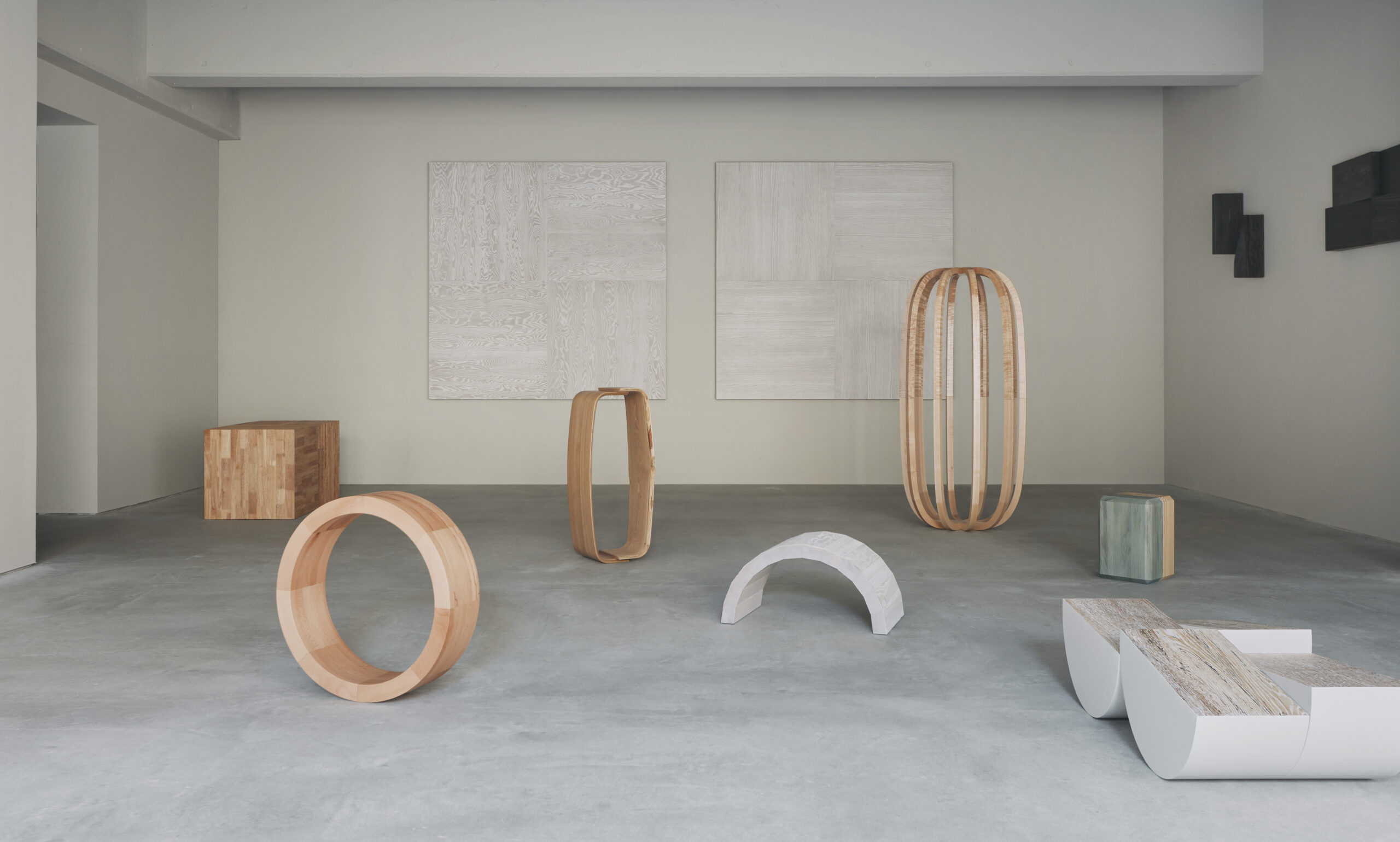
Traces of Life — The forms of wood shaped by nature — Exhibition
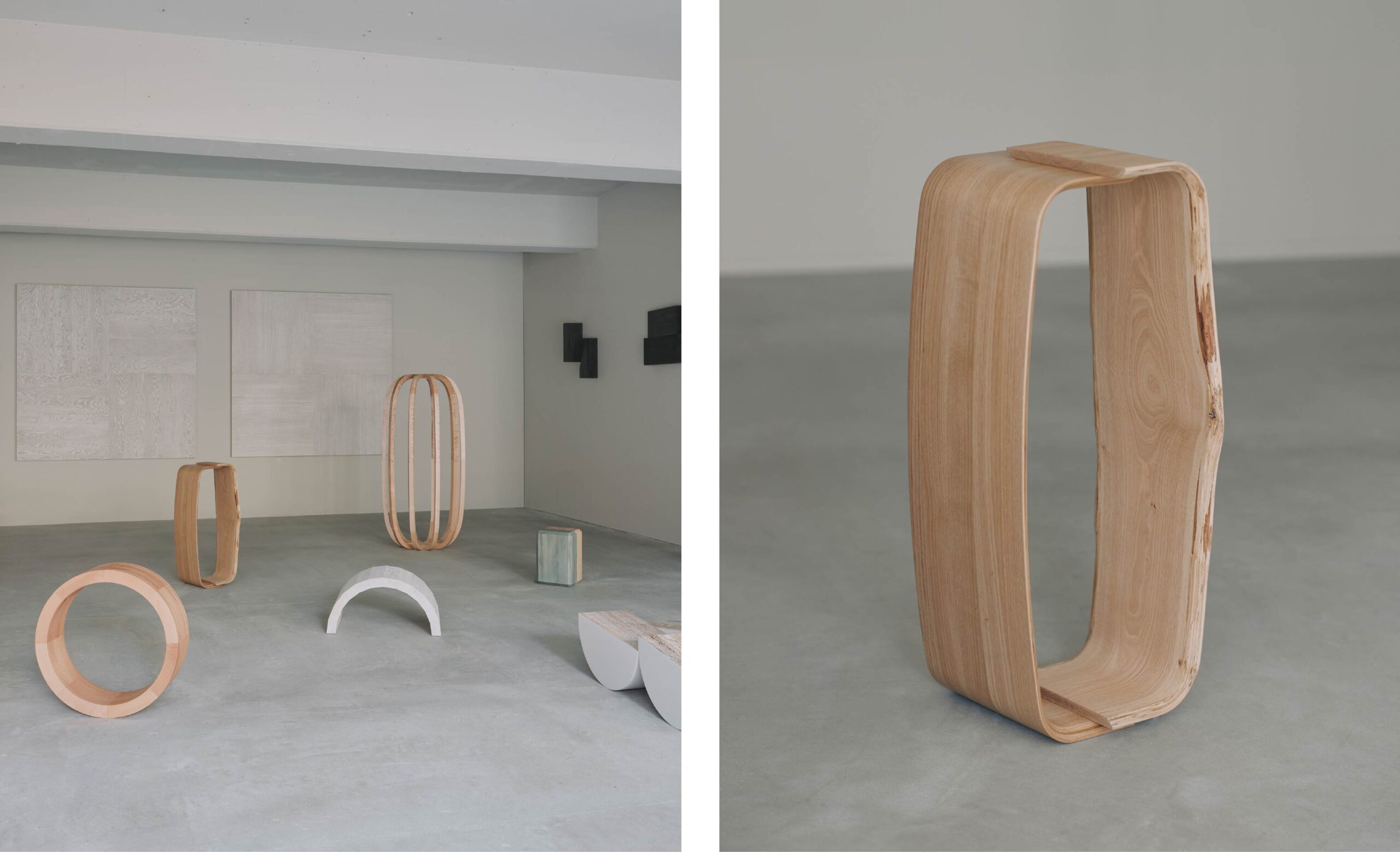
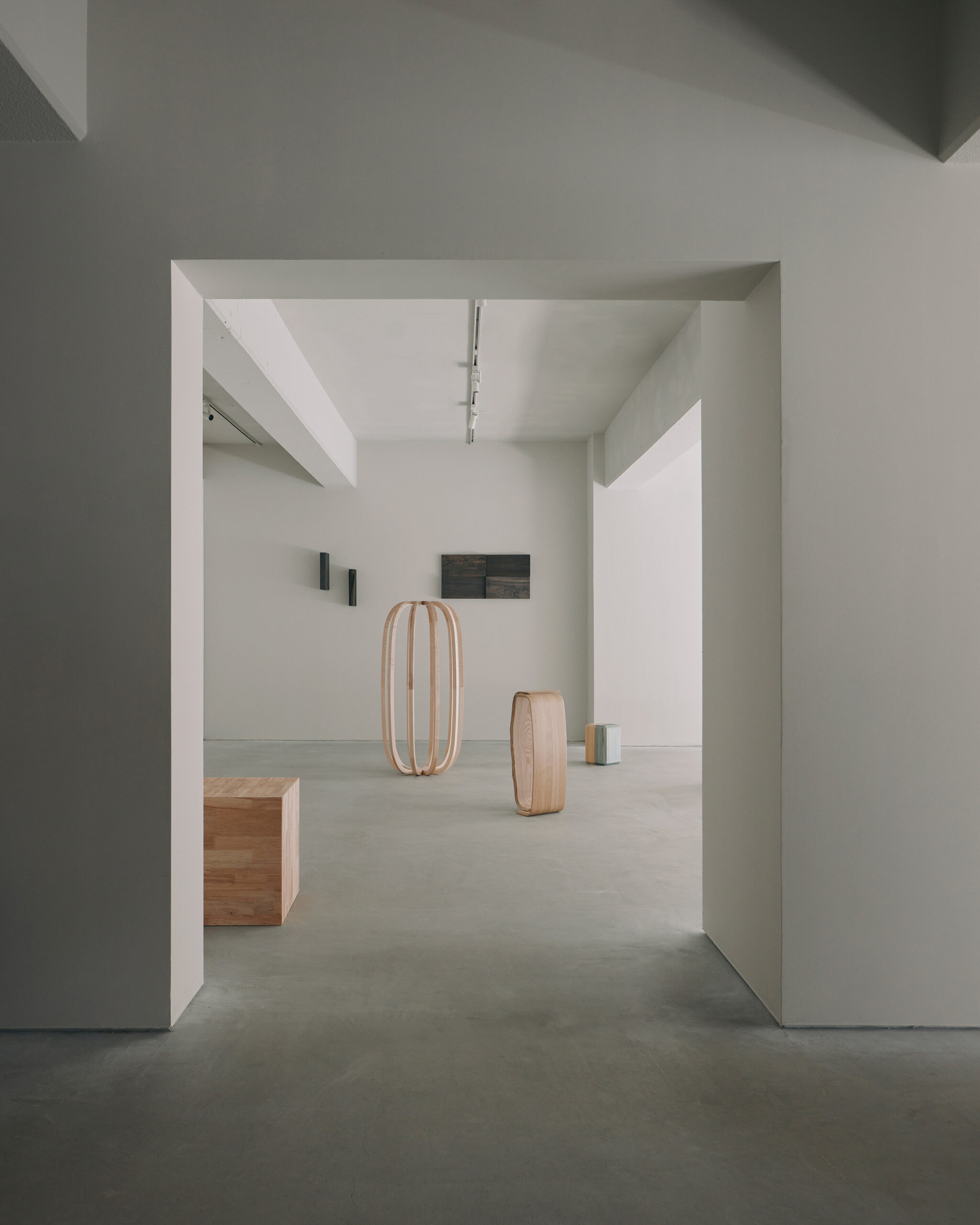
The exhibition “Traces of Life — The forms of wood shaped by nature —” was held at Karimoku Commons Tokyo and organized by Karimoku Furniture Inc. In this exhibition, I was responsible for the overall planning, exhibition direction, spatial composition, and design of the exhibited works.
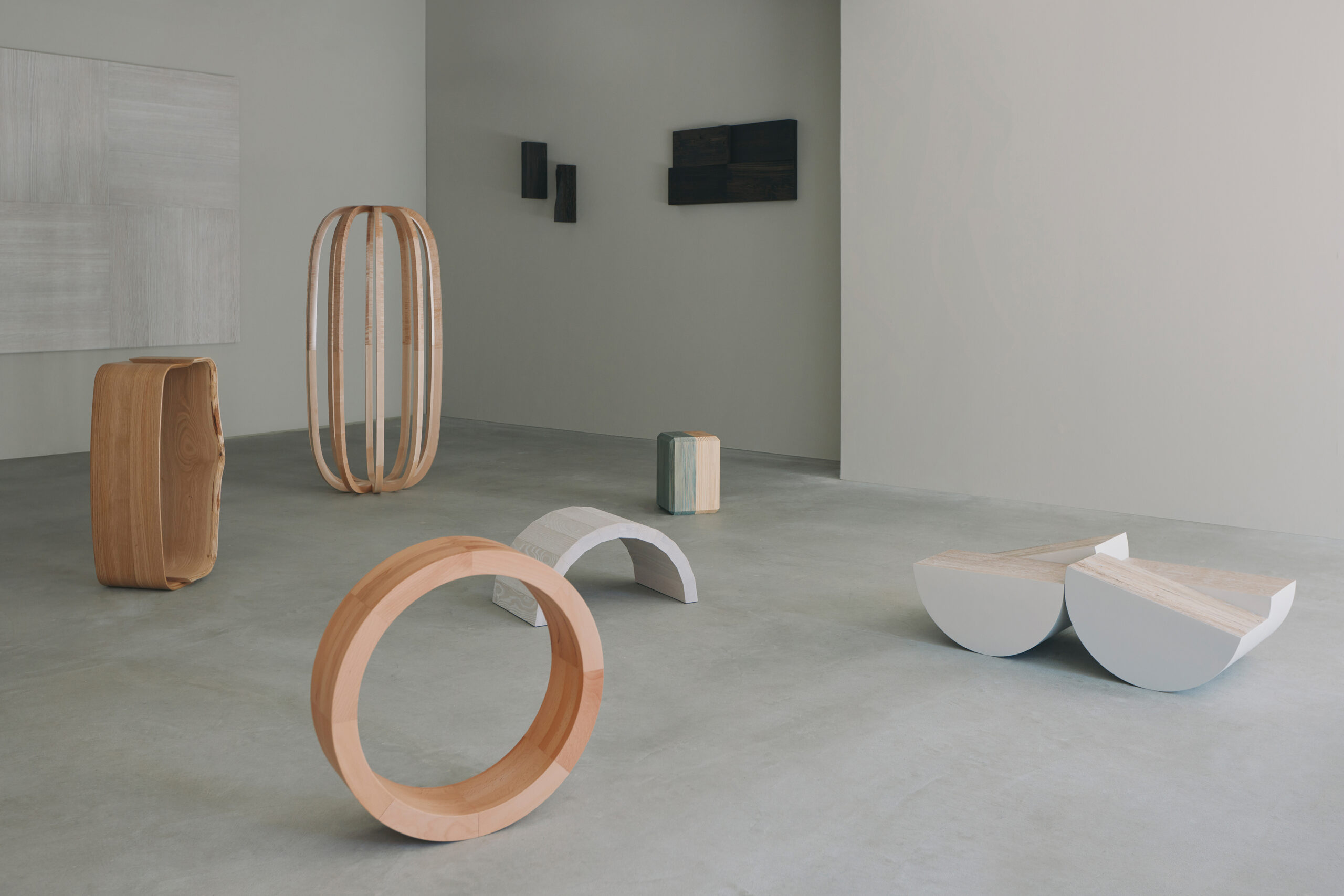
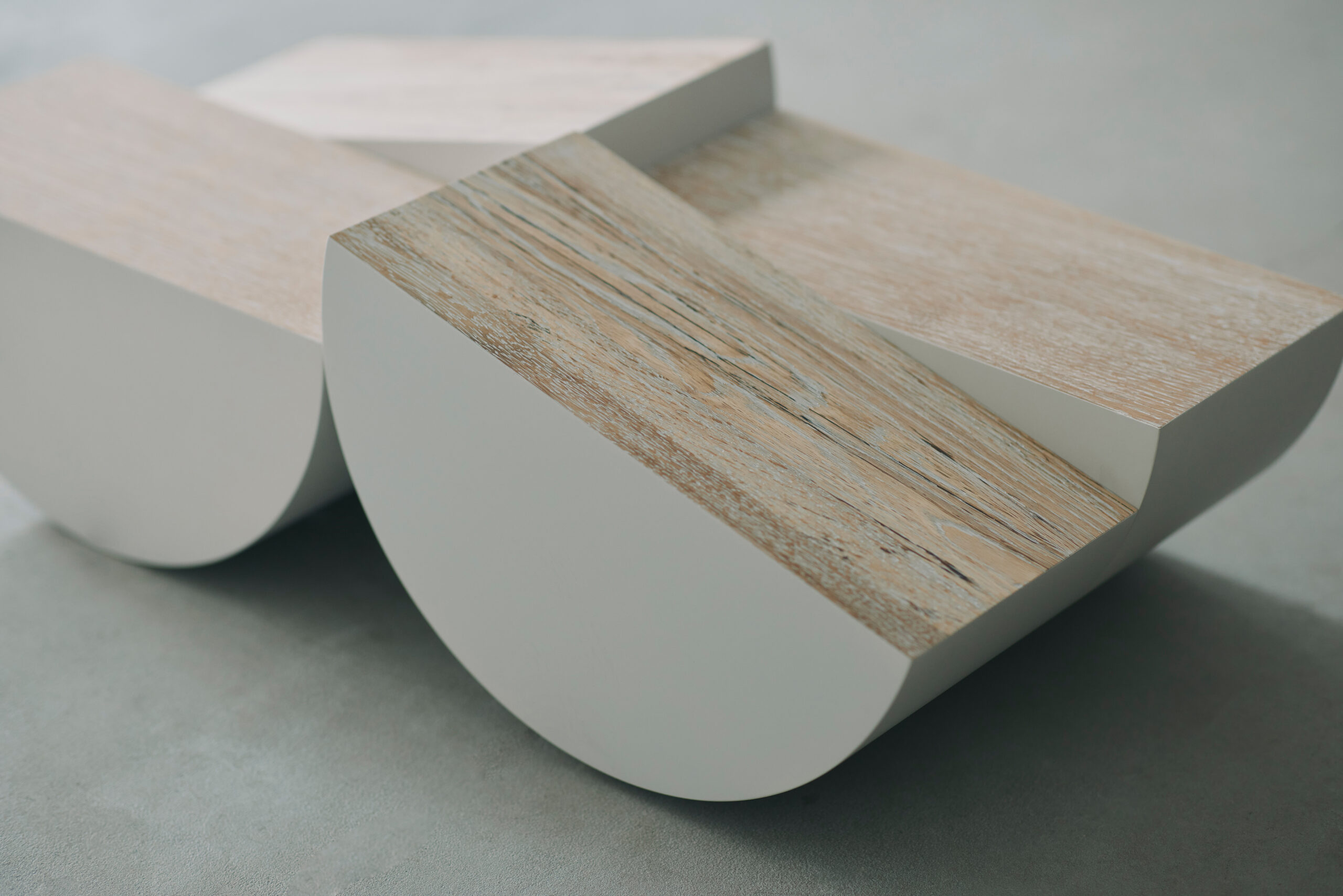
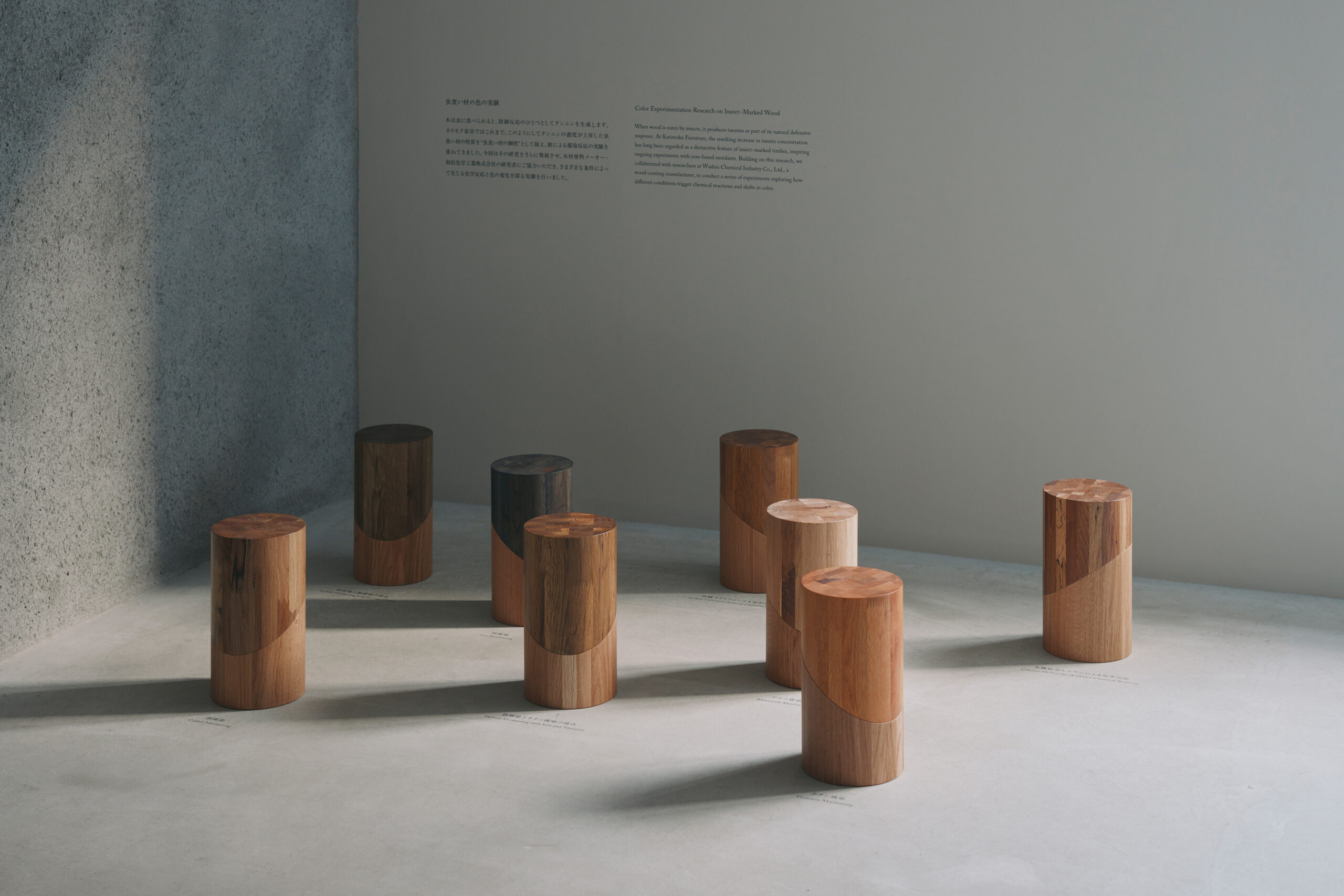
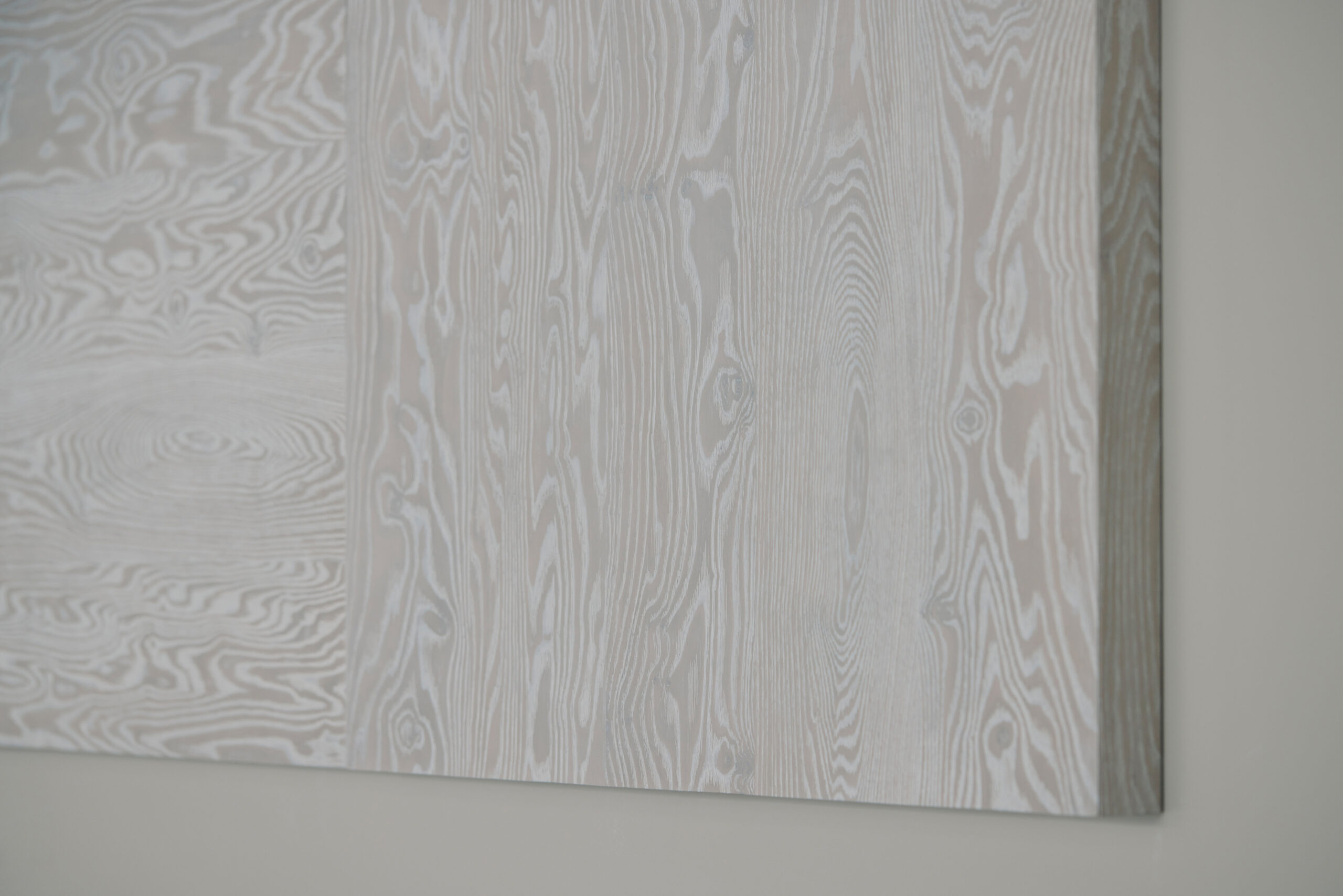
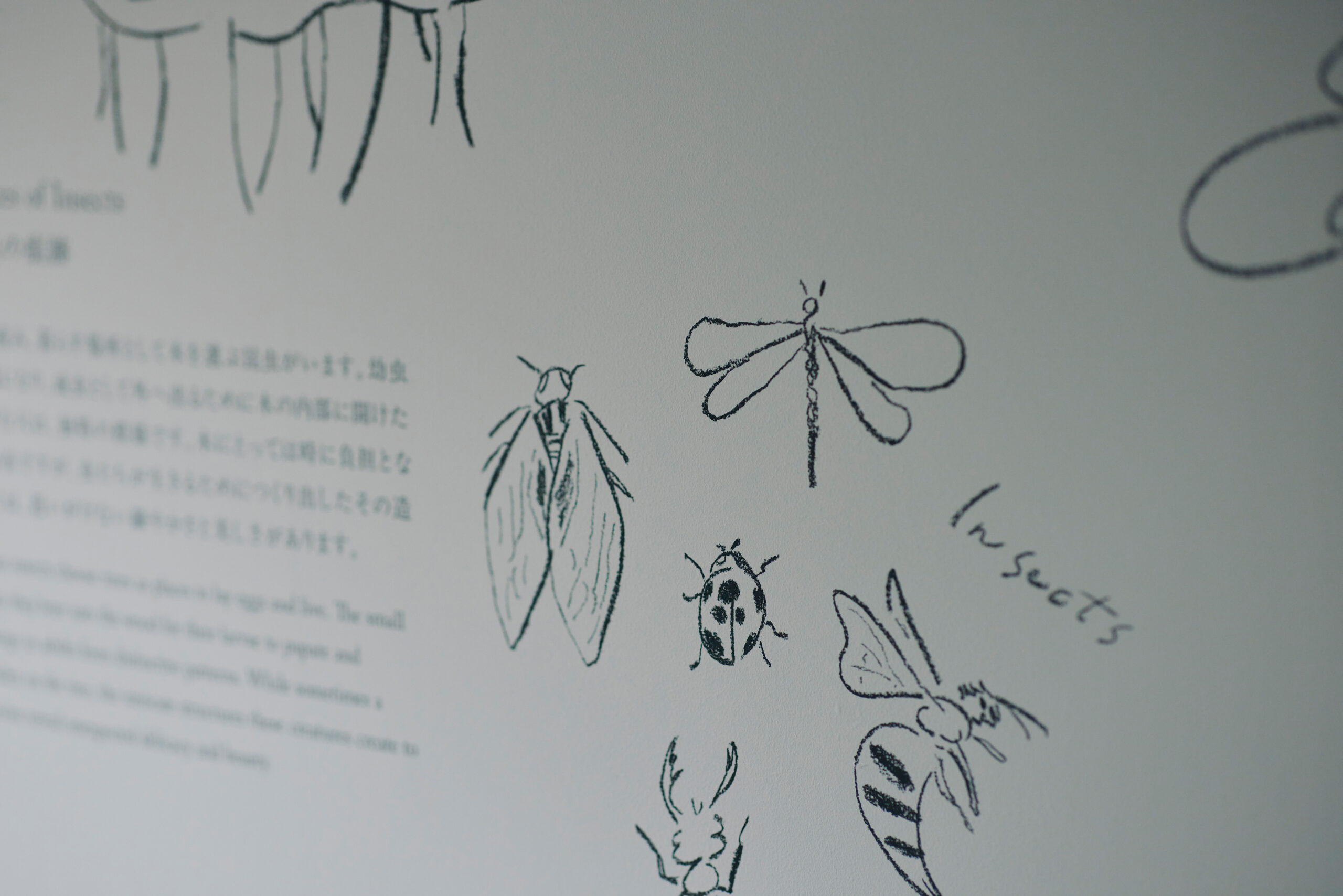
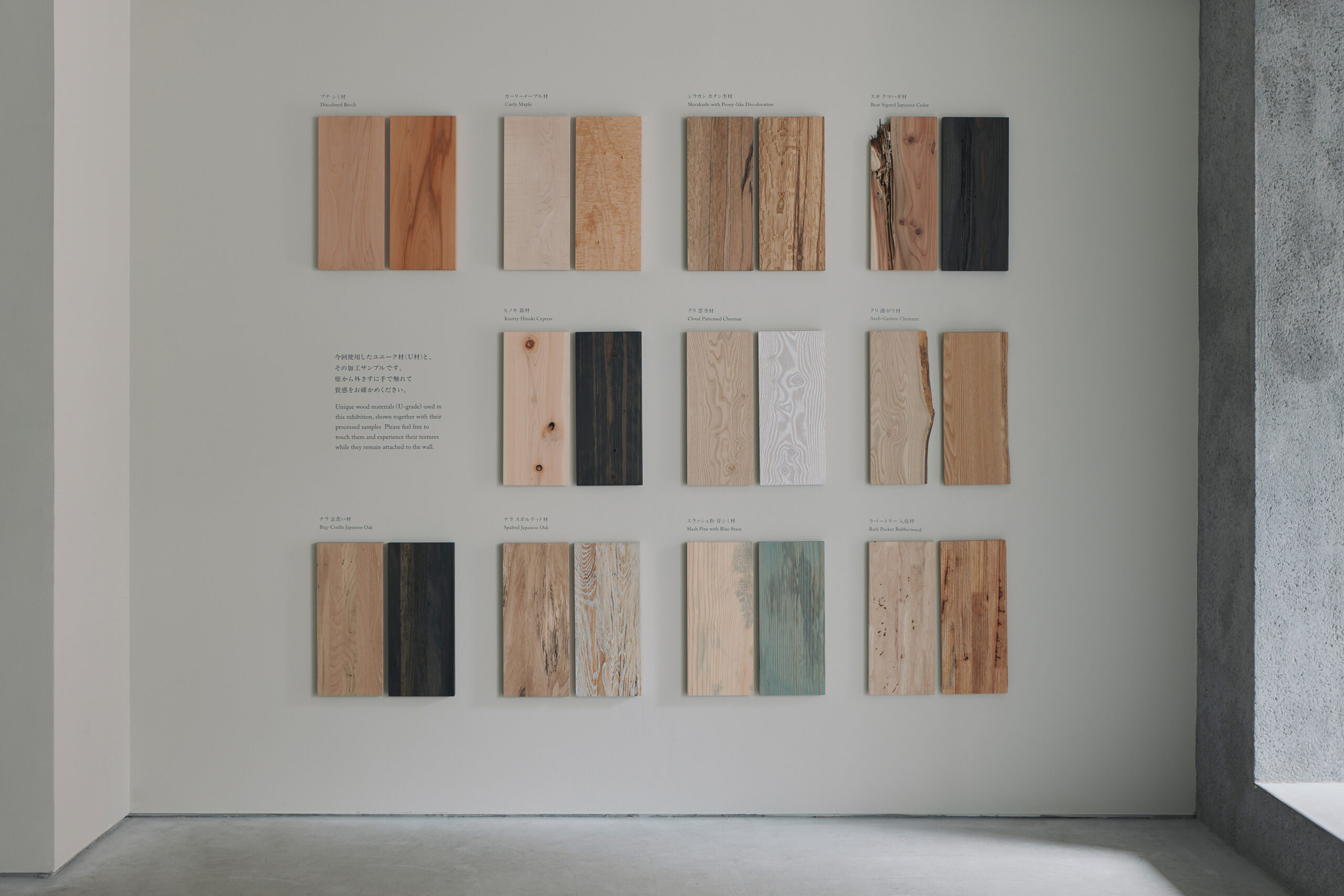
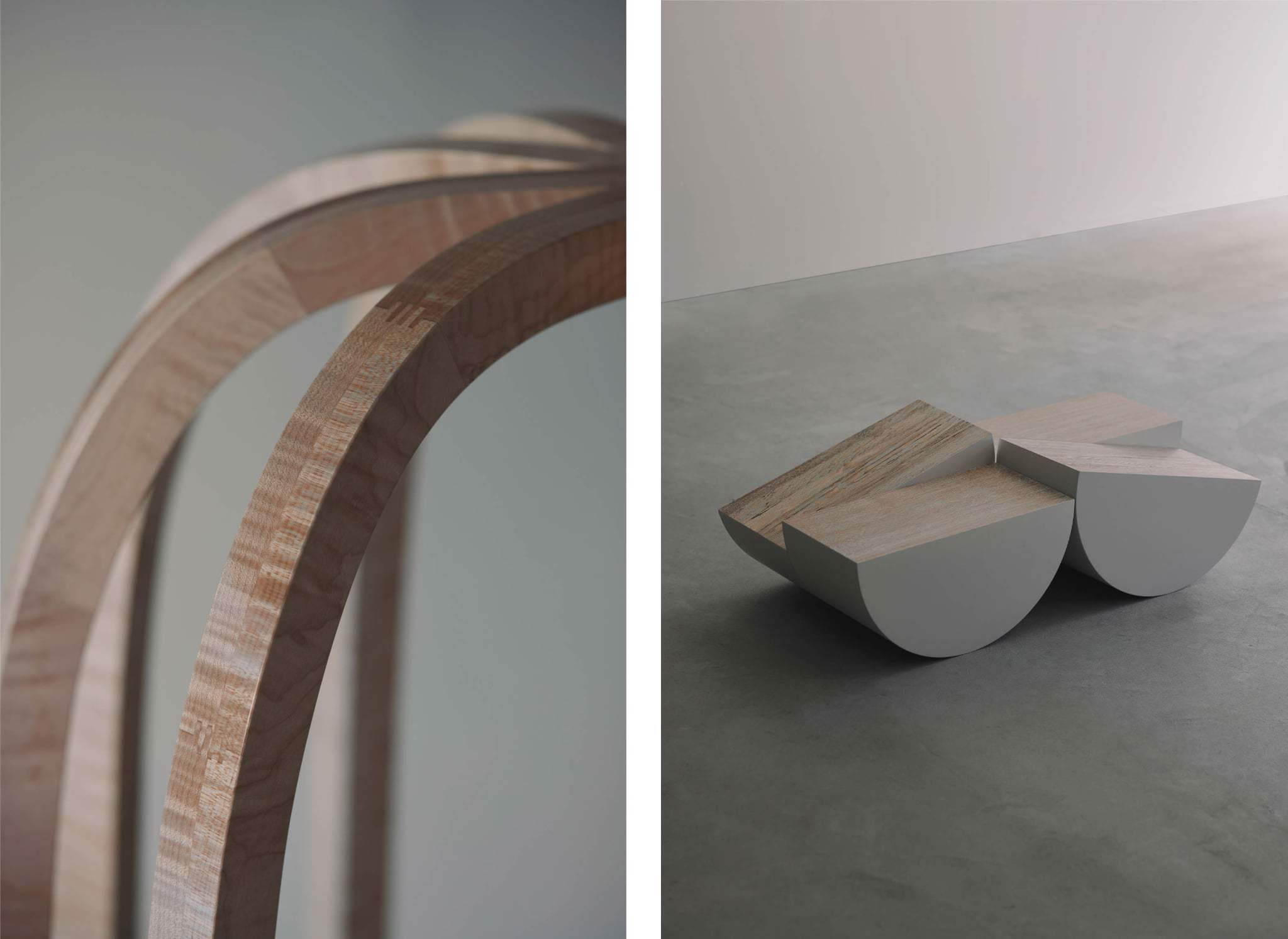
This exhibition was realized through the fusion of my perspective on redefining wood as living beings, inspired by formative experiences in the forest, and Karimoku Furniture’s long-standing commitment to journeying alongside the life of wood. Traces of time shared with other beings and the surrounding environment—such as insect marks, knots, arches, and discoloration—are etched into the wood. I redefined these traces not as defects, but as unique characters shaped through the long passage of time. Presenting these etched traces in new expressions, the exhibition explores new value inherent in the material.
Throughout the production process, I engaged in ongoing dialogue with the Karimoku team and factory craftsmen, exploring the potential of timber that has traditionally been considered difficult to use. In addition, elements that invite visitors to explore the background and stories of the material were incorporated into the exhibition space, allowing the individuality of the wood to be experienced through both form and text.
For the exhibition, wood with minimal knots or scars and uniform grain was defined as “Material A,” and wood previously deemed difficult to work with—such as insect marks, knots, arches, and discoloration—as “Unique Wood (Material U).” Objects were created by pairing wood of the same species but with different characteristics. Acknowledging the distinct beauty inherent in both materials, the exhibition is designed to encourage a deeper exploration of the unique characters and allure of Material U.
Exhibition Credits
Organizer: Karimoku Furniture Inc.
Planning, Exhibition Direction & Design: Shizuka Tatsuno (Shizuka Tatsuno Studio Inc.)
Art Direction: desegno ltd.
Editorial & Writing: Mana Soda
Technical Direction & Construction: Yutaka Endo (LUFTZUG)
Special Thanks: Washin Chemical Industry CO., LTD. / DESIGNTIDE TOKYO 2025 COMMITTEE
Photo: Masaaki Inoue, Bouillon
- Client:
- Karimoku Furniture Inc.
- Exhibition Launch:
- 2024
- Tasks:
- Planning, Exhibition Direction & Design
- Art Direction:
- desegno ltd.
- Technical Direction & Construction:
- Yutaka Endo (LUFTZUG)
- Photographer:
- Masaaki Inoue, Bouillon
“Wood has long coexisted with other living beings.
Its memories invite us to look at them anew, quietly.
Last year, I entered a forest where timber is grown for the first time in my life. While listening to the people who work with trees and manage the forest, I saw the trees thrive in their natural environment. I learned that many of the trees used for timber have grown for about fifty years. Knowing that, I found myself imagining how these trees, older than I am, had experienced the past half-century and what moments they had quietly held over that time.
Only a small part of the forest becomes the wooden products we use in our daily lives. Some trees grow straight, while others show natural twists, scars, or dents. Many kinds of characters coexist. Trees grow through their relationships with climate, soil, and other living beings, yet many are considered difficult to use due to their appearance or material constraints.
But should only wood with few imperfections be considered good?
The shapes and traces found on wood are not mere defects. They reflect the time the trees have spent living together with other beings. At times, they feel like artworks carved by life itself, and they make me realize how unique wood can be even without human intervention. The textures and forms shaped by nature hold a beauty entirely their own.
At Karimoku, I learned that they have long acquired and kept wood marked by insect trails, knots, twists, discoloration, and other features often considered difficult to use, materials they refer to as “unique wood,” among other names, as they seek new value in such materials. Their sincerity resonated with me and aligned with what I felt in the forest. Supported by Karimoku’s craftsmanship and the knowledge of their specialists, I explored the possibilities of these materials from my still-new perspective. This exhibition grew from that experimental process and the inquiry behind it.
I hope you will sense the beauty held within wood and the forms shaped by nature and imagine the many ways they might be used. And if the wooden products you encounter in daily life begin to feel like memories of time lived together, I would be grateful if those moments linger with you.
Shizuka Tatsuno
”