Information
Inscribed Time – Story EN
Building on the research exhibition “Traces of Life — The forms of wood shaped by nature —,” held at Karimoku Commons Tokyo last year, I created “Inscribed Time” in response to “Looking Closely,” the theme of TOKYO MIDTOWN DESIGN LIVE 2026.
The following conversation, originally published in connection with the research exhibition, explores the unique characteristics of wood, its relationship with forests, and the perspectives of those involved in making things. We invite you to read it for a deeper understanding of the ideas behind Inscribed Time.
THINKING OF TREES
At the after-talk session with Shizuka Tatsuno, director and designer of the Traces of Life exhibition, and Aoi Hirano, in charge of timber procurement and management at Karimoku Furniture, Tatsuno was fascinated by Hirano’s remark: “Just looking at the end grain makes me crave a bowl of rice.” Here is a glimpse of their extraordinary passion for wood, something the exhibition alone could never fully express.
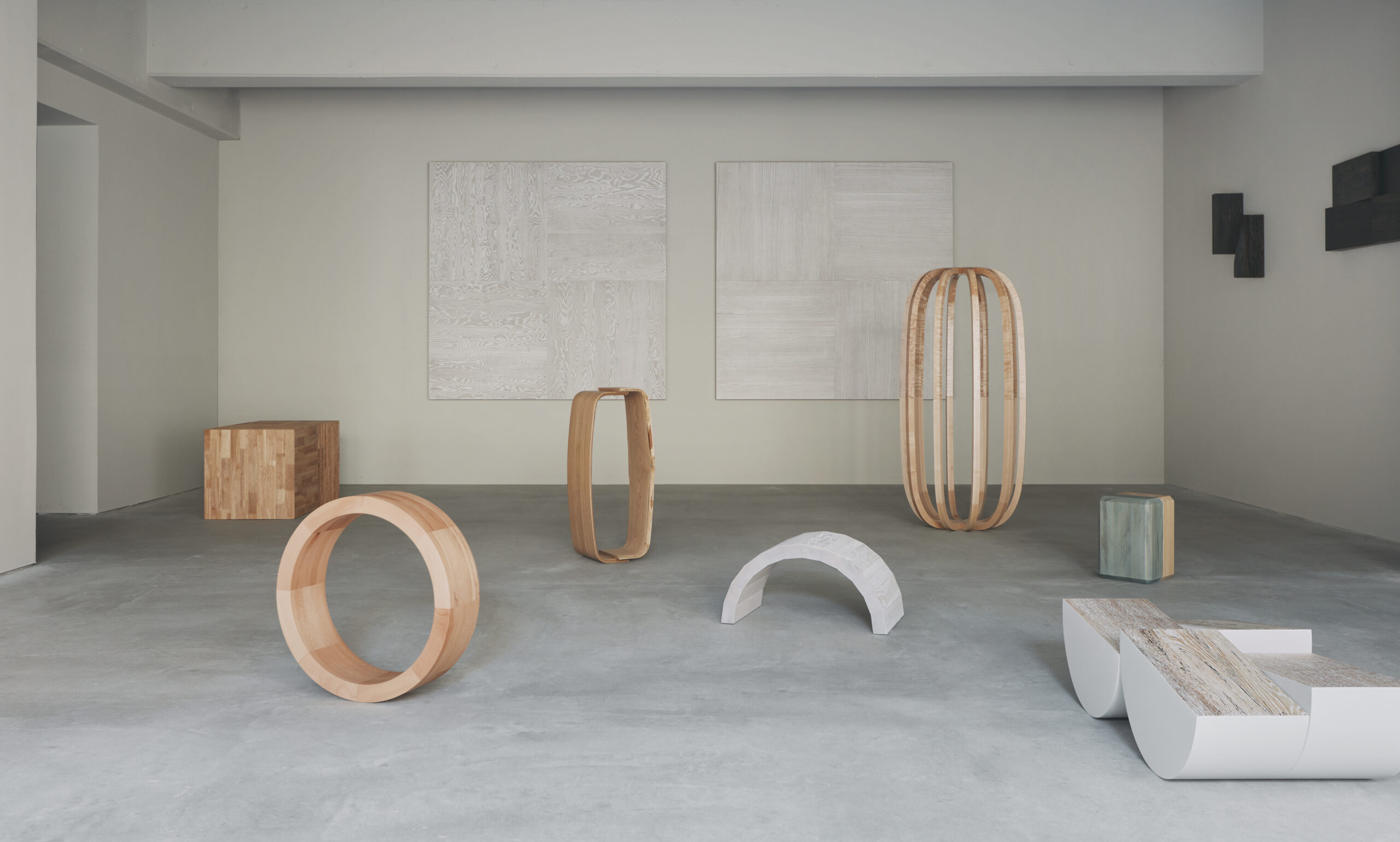
↑ Installation view of the 2025 exhibition “Traces of Life ” (Photo: Masaaki Inoue, Bouillon)
Shizuka Tatsuno(T): Visiting the Karimoku warehouse stocking of the “so-called U-grade(Unique-grade)” lumber to find wood for this exhibition felt like unearthing a treasure trove. Ms. Hirano showed me pieces of the same tree species with different grain patterns. There were so many distinctive woods, and she explained how captivating each one was, adding her own commentary; it was a truly delightful time.
Aoi Hirano(H): Thanks to Ms. Tatsuno, I was able to discover these distinctive wood materials. Your perspective and insights gave me new awareness, allowing me to see the stock in our warehouse from an entirely fresh perspective. I also rediscovered the appeal of many pieces I had overlooked before. It was a truly enjoyable time for me as well.
T: I’m so glad you said that! How much stock is typically kept in the warehouse?
H: In terms of tree species, we carry about 70 types of domestic timber, and nearly 100, including imported timber. If you count the individual character and grades of wood, there might be around 250 varieties.
T: I was amazed and deeply moved that a major furniture manufacturer like Karimoku Furniture store such distinctive and difficult-to-use wood not just for furniture materials, but for the sake of forests, the natural environment, and forestry itself.
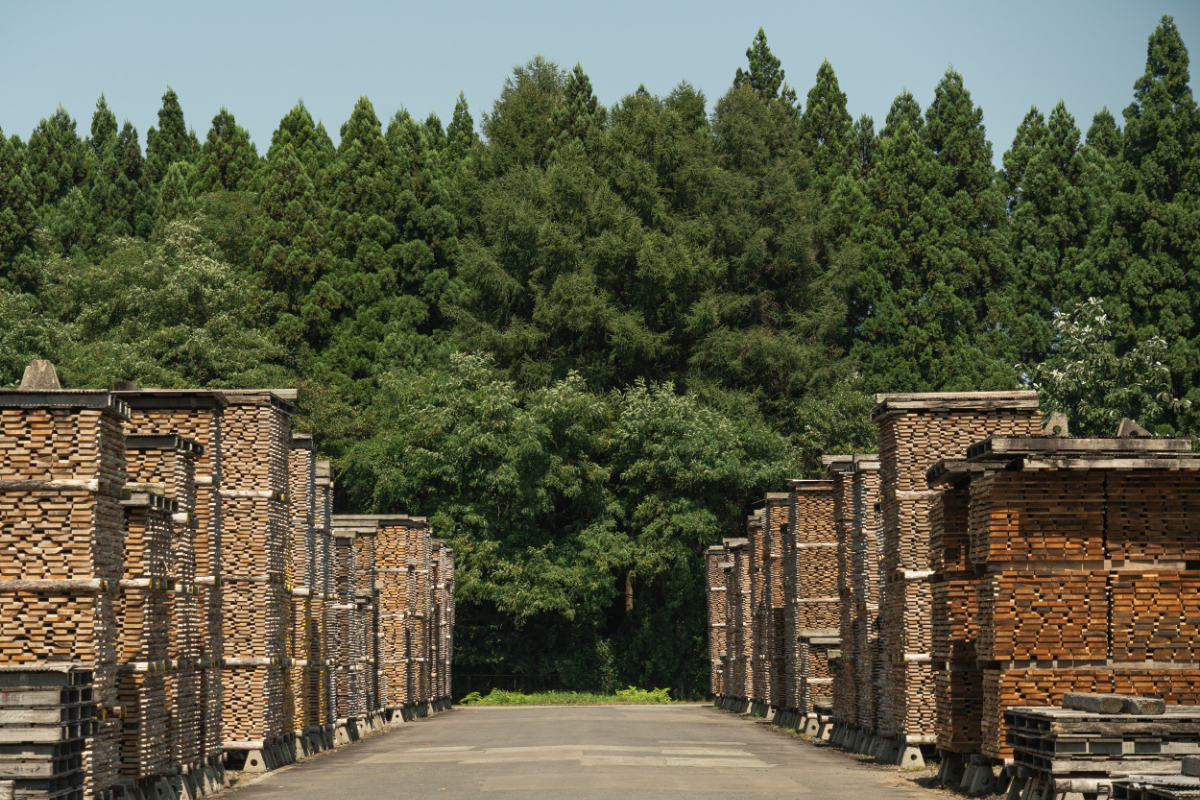
↑Timber management at Karimoku Akita Co., Ltd. (Photo: Tomooki Kengaku)
H: At Karimoku Furniture, we craft furniture using wood, a biological resource. When sourcing timber, we could simply procure only the most convenient or currently in-demand wood. This approach lead to higher yield rates and improves work efficiency. But is that truly the right approach? We’ve long wondered: Are we truly facing the forests where trees live, the people involved, and the issues there? Are we fulfilling our responsibility as those who use wood? This story feels somewhat similar to the one about fish…
T: Fish?
H: Yes. There are also many unnamed fish, simply referred to as “small fish.” While only the so-called famous fish varieties circulate in the market, these nameless fish are utilized in appealing foods like simmered dishes or fish chips. I believe this approach is similar to our wood initiative.
T: I see, that’s easy to understand. That way of thinking seems to be gaining traction in the wood industry as well. Wood is often valued primarily for its functional qualities. Yet when viewed differently, it possesses a unique beauty inherent to organic materials, such as the individuality of its grain patterns, which is unseen in other substances. My sense is that these aspects are frequently overlooked, which led to this exhibition. Upon actually touching the pieces, it becomes clear that Karimoku Furniture truly holds wood with immense potential. Precisely because each piece of wood has its own character, new discoveries can emerge during the processing. I was deeply impressed by the craftspeople who faced these possibilities head-on, thinking, “Let’s give it a try.” It’s through experiences like this that the world takes another step forward, and I feel incredibly fortunate to have been given such a meaningful opportunity.
“Watching it slowly fall felt like attending a funeral, and it made me strongly resolve to cherish this wood and ensure it shines in a place where it truly belongs.”
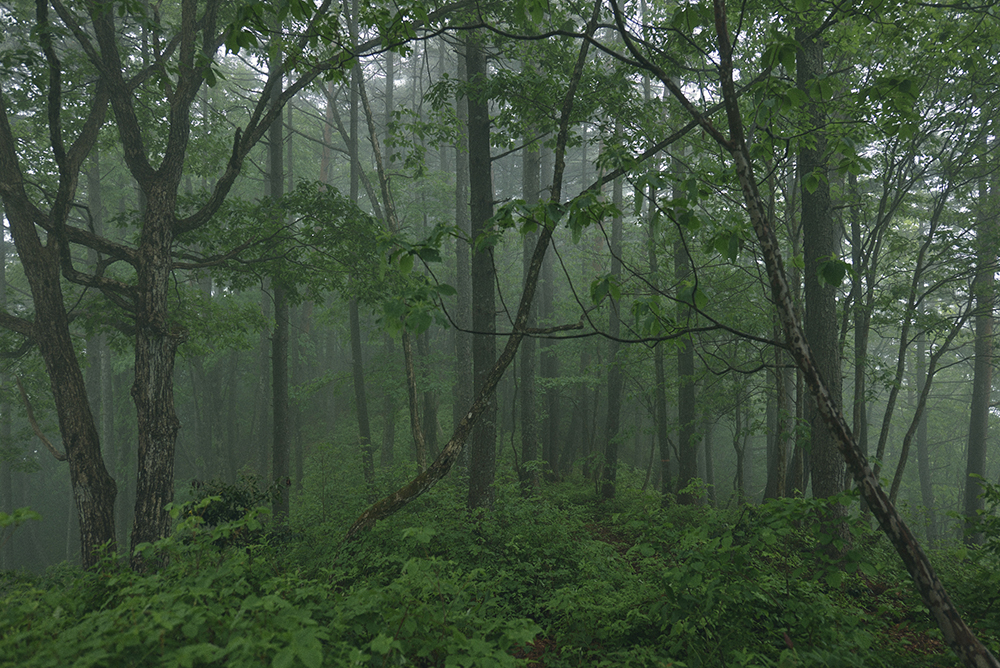
↑ Hida Forest, Gifu Prefecture: a landscape where conifers and broadleaf trees grow together. (Photo: Masaki Ogawa)
H: When giving factory tours to guests, they sometimes see our drying yard where 70 types of domestic timber are air-dried and wonder, “Why stock so much wood when its use isn’t even decided?” When we first started this initiative, even the forest owners were surprised, questioning whether this wood could truly be used for furniture. But we believed that if no one took action, nothing would change. By visiting the sites and communicating with various stakeholders, we increasingly heard, “We have wood like this.” We still have a long way to go, but I’m proud to be involved in this effort as an employee.
T: What a wonderful action. While the characteristics of wood classified as “U-grade” are one thing, I also felt there are challenges with its naming and terminology. For instance, if we called insect-damaged wood “Wormy Art wood,” it might create the impression that the insects are THINKING OF TREES participating in the art, potentially fostering a more positive perspective. Words influence our subconscious and solidify perceptions of value, sochanging the expression could potentially shift how we view things.
H: I agree! I once witnessed the felling of a tree destined to become “insect-damaged wood.” It was a truly magnificent tree, but it was cut down to prevent disease from spreading to other trees. Watching it slowly fall felt like attending a funeral, and it made me strongly resolve to cherish this wood and ensure it shines in a place where it truly belongs. I’m incredibly happy that you discovered it. If we can change the perspective of those who encounter this wood through its positive name, “Wormy Art Wood,” nothing could be more wonderful. It wasn’t just about the insect-damaged wood; what truly delighted me was that you resonated with our vision from the start and responded so beautifully to the tree’s unique character and charm.
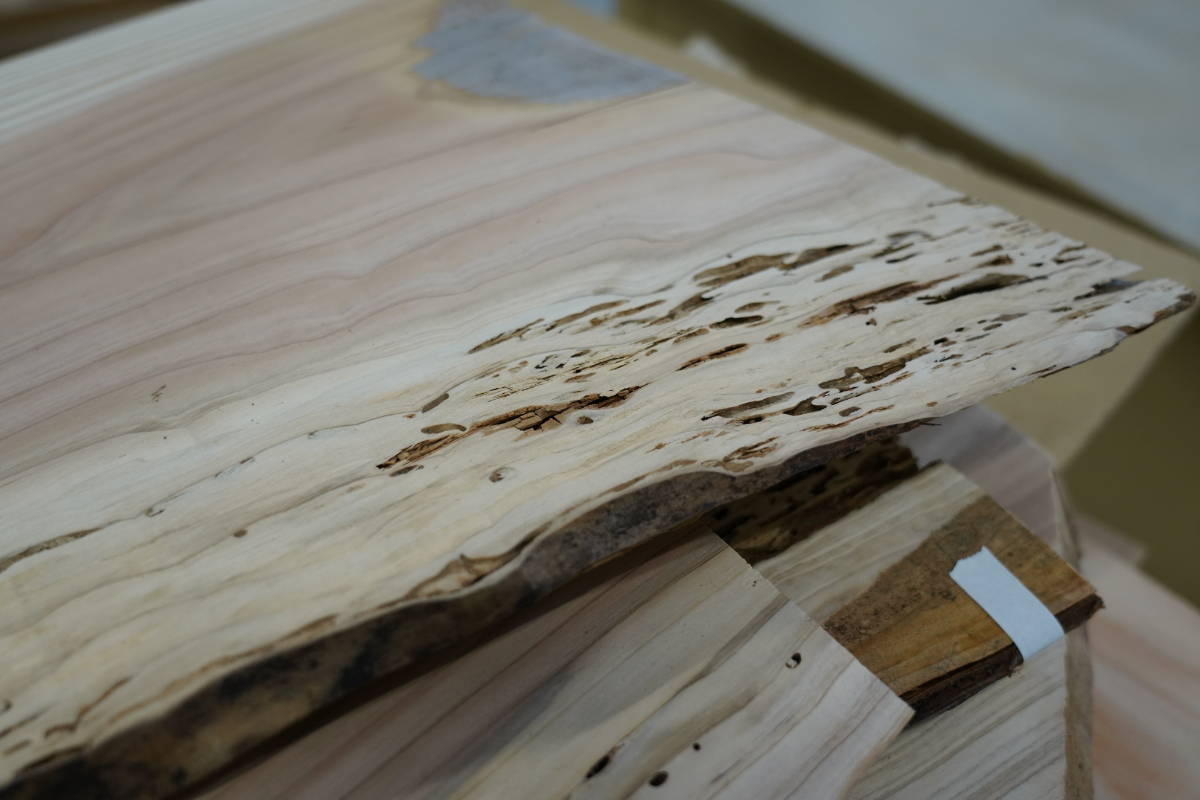
↑ Wood bearing traces left by insects (In the making for the “Traces of Life” exhibition)
T: I was deeply moved to see someone who approaches their work with such reverence for life involved in craftsmanship. I think it helped that I myself wasn’t particularly knowledgeable about wood and didn’t have any preconceived notions about it. Since I handle various materials in my work, approaching wood with a neutral perspective might have been beneficial. I genuinely enjoyed thinking, “Wow, this unique wood is amazing!” And even among the materials and expressions not featured in this exhibition, I sense countless possibilities still waiting to be explored. You researched wood in your graduate school studies. How do you perceive the appeal of wood?
H: Wood is composed of incredibly complex structures, each fulfilling different roles like strength support or water absorption. Textbooks often describe them using phrases like “it is thought that…” and I find it fascinating that it remains a material with many unknowns.
T: Is that why you mentioned earlier that “just looking at the end grain makes you crave a bowl of rice?
“Yet within that unseen world lies the rich depth of life itself. Taking time to ponder its story is one of the joys of truly engaging with trees.”
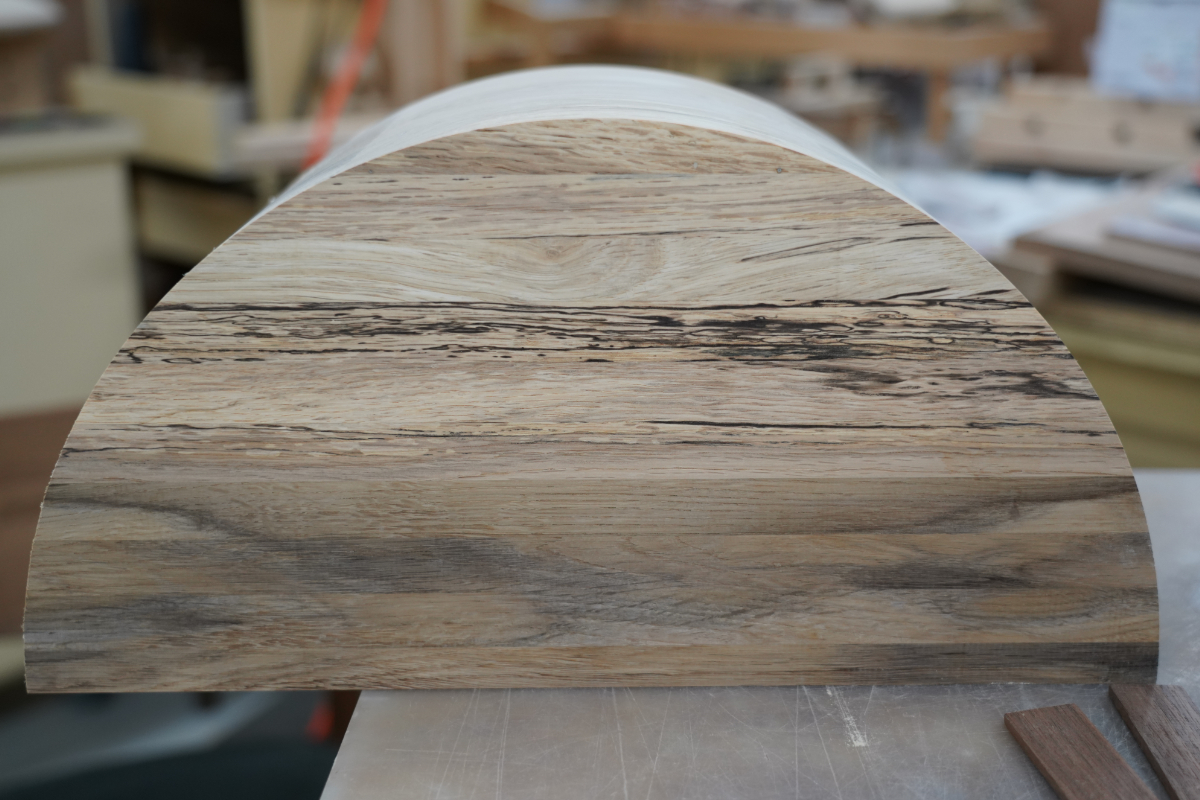
↑ The distinctive appearance of oak shaped by discoloration (In the making for the “Traces of Life” exhibition)
H: Yes, that’s right! Just looking at cells under a microscope or examining tree rings gets me excited. Freshly sawn boards are truly beautiful̶sometimes they even look like premium cuts of meat.
T: I see! Observing wood at the cellular level̶that’s on a whole different level. It reminded me of when we exhibited an object made from “colors” extracted from wood at Karimoku Commons Tokyo before. Using natural dyeing techniques, I extracted color from plum tree branches and learned that the hues vary depending on the season and environment. Seeing how this reflected in the color of the blossoms felt like a touch of romance. The story you shared about tree tissue also reveals characteristics we’d never notice at first glance. Yet within that unseen world lies the rich depth of life itself. Taking time to ponder its story is one of the joys of truly engaging with trees.
H: That’s exactly it! My initial fascination with wood began at the cellular level. I’ve always felt that to spark interest in wood in a way that resonates with a wider audience, that perspective alone wouldn’t suffice; I needed to approach it differently. That’s why your perspective this time was incredibly enlightening and made me see a brighter future.
T: I’m so glad to hear you say that. I’ve been inspired so much myself. Getting to know this microscopic world̶it made me realize trees hold far more “stories” than I ever imagined. Being able to sense the time a tree has lived and its connections with other living things feels incredibly enriching. Personally, I feel fortunate to have encountered this perspective, and I hope this exhibition encourages even a few more people to grow fond of trees.
Shizuka Tatsuno / Creative Director & Designer
Shizuka Tatsuno Studio Inc. Graduated from Kingston University in London with a Product & Furniture Design degree and gained experience at a design studio before becoming independent in 2011. She specializes in exploring the hidden potential of things and transforming them into tangible designs, thus creating a diverse range of works, from practical tools to emotive pieces. She is deeply involved in shaping the core brand concept and product planning. Her approach emphasizes simple expressions that reflect the project’s key concepts.
Aoi Hirano / Karimoku Furniture Inc.
Joined Karimoku Furniture in 2015. Since then, she has worked in production management for the Karimoku Group’s Materials Department. She is responsible for sourcing domestic timber and production management. She visits forests and timber supply bases nationwide, studying the current state of forests and the future of timber procurement.
Editing and Writing (THINKING OF TREES): Mana Soda
——————-
The new work “Inscribed Time,” which emerged from this ongoing experimental research, is on display at “TOKYO MIDTOWN DESIGN LIVE 2026” at Tokyo Midtown (Galleria B1) from October 16 (Fri) to November 4 (Wed).
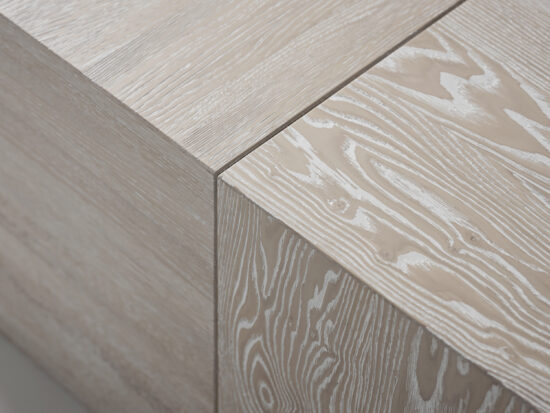
Only one set of this work is available for purchase at Karimoku Commons Shop.